Archives for body-structure
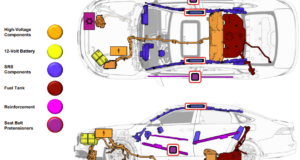
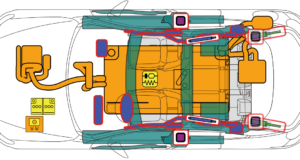
Nothing too unique about the features on the 2013 Jaguar XJ, battery is in the truck and per the Crash Recovery System screenshot below, the stored gas inflator for the side-curtain airbags is just behind the B-Pillar. Dual-stage front airbags, front seat-mounted side airbags, first and second row side-curtain airbags, and active head restraints with front-seat whiplash protection.
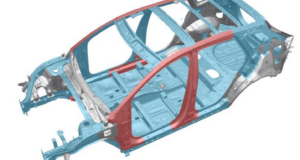
Check out the 2013 Honda N-Box Minicar Body Structure. The B-Pillar is made from 1,500 MPa high tensile hot stamped steel. Hot stamping is used to increase the strength to more than 1,500 MPa by cooling during stamping process.

Safety features:
- i-SRS system for driver side
- SRS airbags for front passengers
- Side Curtain air bag system
- Front seats also feature impact mitigating headrests which protect the driver and front passenger from neck injury.
The 2014 Chevrolet Silverado will start hitting the streets. The new model is packed full of new design features that have change the body structure. Nothing too out of the ordinary, but some areas to take a look at.
To ensure that the new Silverado is up to the challenge, key elements of the updated frame, including the main rails and major cross members, are made from high-strength steel. Hydroforming is used to improve strength and reduce mass of the front of the frame.
The cab structures are all new, and incorporate high strength steel in the A-pillars, B-pillars, roof rails and rocker panels. Ultra-high-strength steel is used in areas of the rocker panels and underbody in anticipation of new shallow-offset crash tests. In all, about two-thirds of the cab structure is made from high-strength steels.
The front structure is made from aluminium die castings, extrusions and pressings. The passenger compartment is made from steel, including roll-formed boron steel in critical load path areas. The roof panel and all of the closures are aluminium.
The body consists of 50% light alloy in combination with high- and ultra-high strength steels. We have achieved maximum crash safety and outstanding body rigidity for the best noise and vibration comfort.”

Here’s a quick look at the 2013 Lexus LS body structure and airbags. Make sure you check the unique airbag inflator in the rear seat!

The LS features dual-stage SRS airbags (Front seats), SRS knee airbags (Front seats), SRS side airbags (Front and outboard rear seats), and SRS curtain shield airbags (Front and rear door windows). An anti-submarining SRS Seat Cushion Airbag is available on long body models. Take a look at the Crash Recovery System screenshot below that shows the anti-submarining airbag.
Nissan has announced its plan to expand the use of Advanced High Tensile Strength Steel (AHSS) in to up to 25 percent of the vehicle parts installed in its new production models. Nissan will make use of advanced high tensile strength steel starting in 2017 as one of its initiatives to help reduce vehicle weight.
Nissan has developed* 1.2 gigapascal (GPa) Ultra High Tensile Strength Steel with High Formability and has employed it in the new Infiniti Q50, which goes on sale in North America in 2013. Prior to the development of 1.2GPa ultra high strength steel it had been difficult to use high tensile steels for vehicle parts with highly complex shapes. Nissan is currently the only vehicle manufacturer using 1.2 GPa Ultra High Tensile Strength Steel with High Formability.
With the active adoption of 1.2 GPa ultra high strength steel, which is one grade among several types of advanced high tensile strength steels, Nissan will increase the adoption rate of AHSS as far as 25 percent of the gross weight of the parts installed per vehicle. This effort will begin in 2017 and aims to reduce the weight of Nissan’s vehicles by 15 percent with corresponding body structure rationalization.
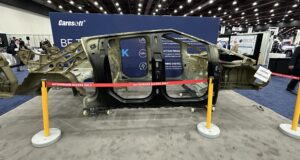
It is no secret that the Ford Fiesta has a bunch of UHSS and born steels in the body structure. We reviewed the 2011 Ford Fiesta when it was first released to the US market. Below are a bunch of pictures of the 2013 Ford Fiesta from the auto show that highlights are the strong steel used.
Make sure you follow the BoronExtrication Facebook and hit “Like”
The body structure of the 2013 Porsche Cayman is now predominantly aluminium, with the rest fashioned from a combination of magnesium and hot formed high-strength steel.
The Cayman is equipped as standard with full-size and knee airbags, which are inflated in two stages depending on the severity and type of accident (e. g. frontal or offset frontal). In less serious accidents, the airbags are only partially inflated, thereby minimizing discomfort to the occupants. So that should to tell you right away that these are dual-stage airbags.
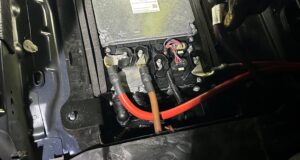
Take a quick look at the 2013 Porsche Cayenne Body Structure. Notice what appears to be a box where the driver’s seat would be installed? That is the battery box for the 12V battery. Just like the VW Touareg. The screenshot from Moditech’s Crash Recovery System (CRS) clearly shows the 12V battery underneath the driver seat.
The Jaguar XK Body Structure is unique because of the extensive use of aluminium. The Jaguar XK body shell is made out of aluminium with the use of aluminium castings and extruded parts along with aluminium stamped panels.
Below is a screenshot from Moditech’s Crash Recovery System that shows the all the information available Notice that the A-Pillar shows a UHSS reinforcement. This shouldn’t come as a surprise, especially since this vehicle is available in a coupe and a convertible.
Below the reinforcement is shown in the cutaway vehicle:
The automatic transmission in the Jaguar XK has a knob and electric parking brake.
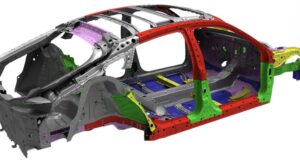
Check out the 2013 Cadillac ATS body structure! Cadillac engineers used Martensitic alloys and ultra-high strength steel, among other materials, help make ATS one of the lightest vehicles in the class. The ATS earned a 5-star overall crash test rating in the New Car Assessment Program run by the National Highway Traffic Safety Administration. The b-pillar is made from Press Hardened/ Hot Stamped steel and Martensite.
The rear seat has an optional airbag that deploys from the outer bolster. The image below shows the concept and location of the airbag. Just keep the location of this stored gas inflator in the back of your head and remember that airbags are now located throughout a vehicle, and not just in the common locations like the dash, pillars, front seats, and headliners.
Just like every Subaru, the 2013 Impreza has their Ring-Shaped Frame Reinforcement body structure with extensive use of high-tensile steel in body structure for strength and safety. All 2013 Impreza models feature a driver’s knee airbag on a roster of safety features that also includes standard front side pelvis/torso airbags and side curtain airbags that offer front and rear outboard seat coverage. The passenger-seat front airbag features a shell-type design with a center groove, thus exposing the passenger to less impact force upon deployment. The seatbelts have pretensioners and force limiters.
Here’s a quick look at the 2013 Mitsubishi Lancer body structure and airbag locations. The Lancer has 7 airbag system dual front airbags, front seat-mounted side airbags and side air curtains. Plus a standard airbag to protect the driver’s knees.
Make sure you take note of the location of the roof/side airbag stored gas inflator in the C-Pillar. The Crash Recovery System screenshot below clearly shows the hazard in a common cut location.