Skip to content


2013 Honda N-Box Minicar Body Structure (Japan)

No comments

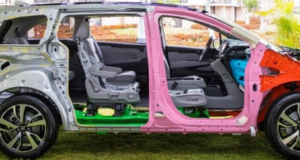
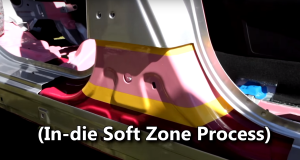
Check out the 2013 Honda N-Box Minicar Body Structure.  The B-Pillar is made from 1,500 MPa high tensile hot stamped steel.  Hot stamping is used to increase the strength to more than 1,500 MPa by cooling during stamping process.
 2013 Honda N-Box Minicar Body Structure BIW Extrication


2013 Honda N-Box Hot Stamped BIW Body Structure Extrication

Safety features:

  • i-SRS system for driver side
  • SRS airbags for front passengers
  • Side Curtain air bag system
  • Front seats also feature impact mitigating headrests which protect the driver and front passenger from neck injury.

2013 Honda N-Box Hot Stamped BIW Body Structure Extrication

2013 honda N-One Minicar Body Structure (Japan)

No comments

Here is one for the folks in Japan. Take a look at the 2013 Honda N-One Minicar Body Structure and airbags.

Honda N-One Minicar Body Structure BIW

Honda N-One Minicar Body Structure BIW Hot Stamped B-Pillar


Honda N-One Minicar Body Structure BIW B-Pillar

Honda N-One Minicar Body Structure BIW A-Pillar

2013 Honda N-One Extrication Safety Airbag Seat

2013 Honda N-One Extrication Safety Airbag Seat

Honda develops new technology to join steel and aluminum

No comments

The new technology to join steel and aluminum that Honda uses will not very much for use in the extrication world except for one thing.  If you look at the bottom 2 pictures you will see that this new technology adds an additional hemming on the flange.  This should help keep the door outer sheet metal from separating from the inner door.

Honda developed a new technology to join steel and aluminum that enables the adoption of aluminum for outer car body panels. The first production application is the new 2014 Acura RLX. The technology allows to replace outer body panels which are conventionally made of steel with lighter ones made out of aluminum.


Honda used this application on the outer door panel of the 2014 Acura RLX that went on sale in the United States March 2013. The technology is expected to be adopted sequentially to other models.

To join together the dissimilar metals of steel and aluminum, the simultaneous establishment of several different technologies was required such as technologies to prevent corrosion (electrical corrosion) and thermal deformation caused by the different expansion rates of steel and aluminum. The advantages of these new technologies include elimination of a spot welding process required to join conventional steel door panels. The new technology contributes to the improvement of fuel economy and dynamic performance of the vehicle by reducing door panel weight by approximately 17% compared to the conventional all-steel door panel.

2013 Honda Fit Body Structure and Airbags

No comments

Body Structure

2013 Honda Fit Body Structure

The 2013 Honda Fit utilizes Advanced Compatibility Engineering™ (ACE™) body-structure technology to enhance occupant protection and crash compatibility in frontal collisions. The ACE system actively channels frontal crash energy to both upper and lower structural elements, including the floor frame rails, side sills and A-pillars.  The ACE body structure routes crash forces around and away from the passenger compartment.

Airbags

2013 Honda Fit Airbag Extrication

The  Fit has six standard airbags.  The Fit has side curtain airbags and the passenger-side Occupant Position Detection System (OPDS) airbag that will not deploy if the system detects a smaller-sized or out-of-position occupant.  Both the driver and front passenger front airbags (SRS) incorporate dual-stage and multiple-threshold activation technology. The front row seats also have seat belt pretensioners and active head restraints.

Battery Crash Safety

The Electric Vehicle Fit is designed to protect the high-voltage parts within the vehicle in case of a severe crash. For example, the floor frame and crossmembers form a grid-like compartment to surround and protect the drive battery. The electrical flow is automatically disconnected if a severe crash occurs.

2013 Honda Fit HV Safety Extrication

Make sure you take a quick look through the 2013 Honda Fit Emergency Response Guide.

2013 Honda FIT EV HV Battery Extrication


2012 Honda CR-V Body Structure

No comments

Below is a screen shot from Moditech’s Crash Recovery System (CRS) for the 2012 Honda CR-V.  The standard safety features in the CR-V inlcude a body structure that enhances occupant protection and crash compatibility in frontal collisions.   Safety feature include automatic tensioning front seat belts, side curtain airbags with rollover sensor and dual-stage, multiple-threshold front airbags (SRS).

2012 Honda CR-V Body Structure Safety Airbag Extrication CRS Moditech

The body structure of the 2012 Honda CR-V Body Structure is shown is several images below.

2012 Honda cr-v safety extrication ACE Body Structure

The ratings that the 2012 Honda CR-V received should also give you a little insight into the body structure and safety features.

  • 5-Star Safety -The CR-V was not fazed at all when the National Highway Traffic Safety Administration (NHTSA) made their crash-safety tests tougher than ever. Even with more stringent testing in place, the 2013 CR-V earned a 5-star Overall Vehicle Score.
  • Top Safety - The Insurance Institute for Highway Safety (IIHS) named the CR-V a 2012 Top Safety Pick. The CR-V received top ratings in all four IIHS tests, including the front and side crash tests, a rollover test, and an evaluation of the seat and head restraints for protection against neck injuries in the event of a rear-impact collision

2012 Honda CR-V Body Structure Extrication

2012 Honda CR-V Body Structure Extrication

2012 Honda CR-V Body Structure Extrication Airbag

2012 Honda CR-Z Hybrid Body Structure

No comments

Here’s a quick look at the 2012 Honda CR-Z Hybrid body structure and interior hazards.

2012 Honda CR-Z Hybrid Body Structure Extrication

2012 Honda CR-Z Hybrid Body Structure

2012 Honda Civic Hybrid Extrication Hazards

No comments

You are dispatched to an MVA with a Honda Civic and another vehicle.  You ATF that the appearance of the 2012 Civic Hybrid is essentially the same as conventional Civic sedans.  The only difference is the word “Hybrid” appears on the right rear of the vehicle on the Hybrid model.

2012 Honda Civic Hybrid Extrication Hazards

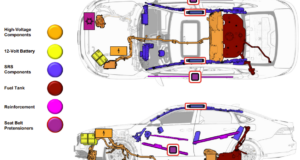
2012_Honda_Civic_Hybrid_Extrication_Hazards_battery

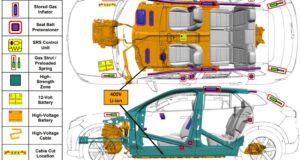
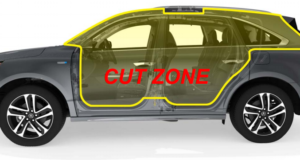
The Cut Zones are highlighted in blue below.  Make sure you take note of the Side Curtain Airbag Inflators in the C-Pillar.

2012_Honda_Civic_Hybrid_Extrication_Hazards_Airbags_Cut_Zones

2012 Honda Civic hybrid technical illustration for engine, hybrid IMA layout with Intelligent Power Unit (IPU) and chassis.


Extrication of a Patient with a Pole Embedded in Car

6 comments

A video of an extrication where a car was embedded around a metal traffic signal pole was post on YouTube a couple of years back.  The extrication was handled by the Santa Fe Spring Fire Department and LA County Fire Department. What is good about the video is how much of the extrication process that was recorded.  The video is a great training aid because it makes you think about having a plan A, B, and maybe even C and D.  This was an actual extrication.  So if in the video you would have done something different than please post a comment. I always like to hear the different approaches and techniques that other departments would have used.  A comment was posted on YouTube that there was some cutting and spreading done with the vehicle glass still in place.  However, what is the first thing you notice about the glass?  Tinted?  Aftermarket tint?  I would say definitely aftermarket tint because at 1:46 in the video you can see two firefighters handle the shattered rear glass in one piece.  It’s a great video, give it a look and let me know what you think?

2011 Honda Insight Hybrid Electric Body Structure

2 comments

The 2008 – 2011 The Honda Insight is a hybrid electric vehicle. The Insight has the Advanced Compatibility Engineering (ACE) Body Structure. Which means a strong body structure.

2011 Honda CR-Z Sport Hybrid Coupe Body Structure

No comments

The Body Structure of the 2011 Honda CR-Z is made up with 45% high-strength steel (590 MPa or above).


2011 Honda CR-Z Advanced Compatibility Engineering (ACE) body structure

2011_Honda_CR-Z_High-Strength_Steel_Body_Structure_ACE


Most likely you looked at the image above and asked why does the windshield interface matter during an extrication?  The 2011 Honda CR-Z has a thin A-pillar design that measures 108.8 mm in minimal thickness to improve forward visibility.  Why it really matters is the A-pillar get strength through the use of high-grade, high-tensile steel of class 780MPa.

Also make sure you read through Honda’s Emergency Response Guide ERG.

Source of images and information: Honda Media Newsroom

2010 Honda Ridgeline Body Structure

3 comments

Designed to be highly rigid for enhanced crash protection, The Ridgeline has a tough backbone that incorporates an integrated closed-box frame and a reinforced unit-body. The result is a robust truck that provides a reduced likelihood of rollover and exceptional safety ratings in its class.

2010 Honda Civic Body Structure and Hybrid Battery Disconnect

No comments

Civic Hybrid with Vehicle Stability Assist™ (VSA®) was named a 2010 TOP SAFETY PICK by the Insurance Institute for Highway Safety (IIHS). According to the IIHS, the award “recognizes vehicles that do the best job of protecting people in front, side, rear, and now [for 2010] rollover crashes.”  So there is some Ultra-high Strength Steel lurking in the body structure!  Any body pillar, rail, or rocker that is a different color in the images below is worth taking a mental snapshot.

Honda Civic Hybrid Power train Overview
Securing the power on a Honda Civic Hybrid is fairly straight forward.  The battery disconnect switch is in the image to the left, but hidden from plain view.  On a Honda Civic hybrid, the battery is disconnected by removing the rear seat back cushion, removing two screws from a small cover with the word “UP” on the cover, the flipping the power switch DOWN to the OFF position.
There is a really great article written on aa1car.com on Hybrid Hazards and disconnect procedures on different models.

2010 Honda Accord Crosstour Body Structure

1 comment
The Honda Accord Crosstour is made from 46 percent high-strength steel. Just like every other Honda, the Crosstour uses the Advanced Compatibility Engineering™ (ACE™) body structure. High tensile strength steel tubular beams are inside the door structure for side impact protection.

2010 Acura TSX Body Structure UHSS or Boron?

2 comments
Since Acura is a basically a Honda, the vehicles utilize the Advanced Compatibility Engineering™ (ACE™) body structure.
A highly rigid body design with a cross-braced roof structure and a safety cage-type rear bulkhead structure.   The frame rails repositioned to inside of floor pan and the roof structure is a closed-channel cross-braced design. The TSX also has A, B & C-pillar separators and thinner sections to improve visibility which means the pillars are stronger.

2010 Honda Pilot Body Construction

No comments

The 2010 Honda Pilot has earned the coveted 5-Star ranking from the National Highway Traffic Safety Administration (NHTSA). The 2010 Pilot has received a 5-star frontal and 5-star side-impact crash test rating which means there is some high strength steel in the body construction. In fact, The unit-body construction makes extensive use of high-strength steel (52 percent) to minimize weight. Of course, the famous Advanced Compatibility Engineering™ (ACE™) Body Structure is used to help.

2010 Honda Accord Body Structure

No comments
The 2010 Honda Accord is full of safety devices like airbags and occupant sensors. What is not common knowledge is the amount of UHSS and Boron used. Honda has stated:
The highly rigid unit body helps the Accord Sedan achieve its exceptional
structural rigidity and crash protection. A high percentage of high-tensile
steel helps it to better absorb impact forces from the front, sides and rear, as
well as the roof, in the event of a rollover.

2010 Honda Accord Crosstour Advanced Compatibility Engineering (ACE) body structure is below.

2010 Honda Odyssey Body Structure

2 comments

As usual, little information on the type of steel Honda use in the Advanced Compatibility Engineering™ (ACE™) Body Structure. I would safety assume that any of the colored stampings have some form of Ultra-high Strength Steel (UHSS) or Boron. Also take note of the side-impact door beams.
The ACE body structure incorporates a front-end frame structure that absorbs and disperses crash energy over a large area. ACE increases Odyssey passenger protection, and makes it more crash-compatible with vehicles of differing heights.

The Honda Odyssey has three rows of seating. So naturally any side impact airbag would cover all three rows. If the side impact air bags are not deployed. Use caution when making cuts to the B and C-pillars. There is most likely multiple inflators.

Just a little extra information. The Honda Odyssey earned a 5-star rating in frontal- and side-impact tests performed by the National Highway Traffic Safety Administration (NHTSA). That means there are some very tough parts of the body structure.

2010 Acura TL Ultra-high Strength Steel

No comments
The 2010 TL has widespread use of high-strength sheet steel, which provides benefits in ride, handling and overall durability. The TL uses five different types of high-strength steel, including ultra high-strength hot-stamp steel that is heated before it is stamped into shape for the front unit-body rails, doorsills, B-pillar and side roof rails. A total of 47.6-percent of the steel used in the TL is high-strength steel. Hot-stamp steel and 980 grade high-strength steel, two premium types of steel, are used in the TL for the first time.

Honda Emergency Response Quick Reference

No comments

Honda Motors put together a short Emergency Response Quick Reference Guide. The guide is not completely up to date but very useful for a quick read to throw into your mental toolbox.

2009 Honda Element Body Structure

No comments

A few quick images of the Honda Element’s body structure. I’m currently trying to get some information about the steel that is used from Honda. I would image that the yellow represents a high strength steel or reinforcement. Check back for an update on more Honda vehicles.

2010 Honda Fit Body Structure

2 comments
The 2010 Honda Fit uses over 50% advanced high strength steels (AHSS) in the body structure. Below is a partial view of the body-in-white structure for the Fit.

An interesting feature in the Honda Fit is the use of double side-impact beams.

The Fit also uses Honda’s Advanced Compatibility Engineering™ (ACE™) Body Structure.

The Advanced Compatibility Engineering™ (ACE™) body structure is a Honda
exclusive body design that enhances occupant protection and crash compatibility
in frontal collisions. The ACE design utilizes a network of connected structural
elements to distribute crash energy more evenly throughout the front of the
vehicle. This enhanced frontal crash energy management helps to reduce the
forces transferred to the passenger compartment and can help to more evenly
disperse the forces transferred to other vehicles in a crash.

Honda and Ultra-high Strength Steel

No comments

At Honda, they have significantly upped the amount of high-strength steels used in the new Acura MDX, from 13 percent of the structure to 56.3 percent, including grades 780 and 980, which are in the ultra high-strength steel category. Honda also published results on the use of advanced- and ultra high-strength steels in the basic body-in-white for the RDX and CRV. The body-in-white constitutes 30 percent of the vehicle curb weight in this case:

  • AHSS will provide the same or better impact resistance as mild steel with one step lower gauge (thickness) providing a typical 13 percent reduction in mass.
  • UHSS will provide better crash impact resistance than mild steel with two steps lower gauge (thickness) providing a typical 24 percent reduction in mass.
  • The composite average of AHSS and UHSS regarding reduction in mass is typically 15 percent.

More info here: http://www.sprottmoly.com/pdf/UHSS.pdf